

Toronto Handyman Painting Guide
Interior Painting Guide: Paint, Sheens, Rollers & Brushes
Learn how to choose interior paint, understand different finish levels, select the right roller and brush, prepare surfaces, and get a cleaner professional-looking finish.
Good Painting Starts Before the Paint Goes on the Wall
Choosing a colour is only one part of an interior painting project. The paint quality, finish level, wall condition, roller nap, brush type, preparation, and application technique can all affect the final appearance.
This guide explains the basic tools and choices we use when approaching common interior painting projects.
Choosing a Quality Interior Paint
For interior painting, the brand matters less than choosing the right product line, sheen, colour, and application method for the surface being painted.
Common professional-quality options include Benjamin Moore, Sherwin-Williams, and BEHR. Each brand offers interior paints in multiple sheen levels for walls, ceilings, trim, doors, kitchens, bathrooms, and other interior surfaces.
Matte, eggshell, satin, and semi-gloss can behave very differently. The right finish depends on the surface, traffic level, cleaning requirements, and how smooth the wall is.
Matte, Eggshell, Satin or Semi-Gloss?
Paint sheen describes how much light the finished surface reflects. There is no single finish that is best everywhere. The correct choice depends on the room, surface, traffic, cleaning requirements, and condition of the wall.
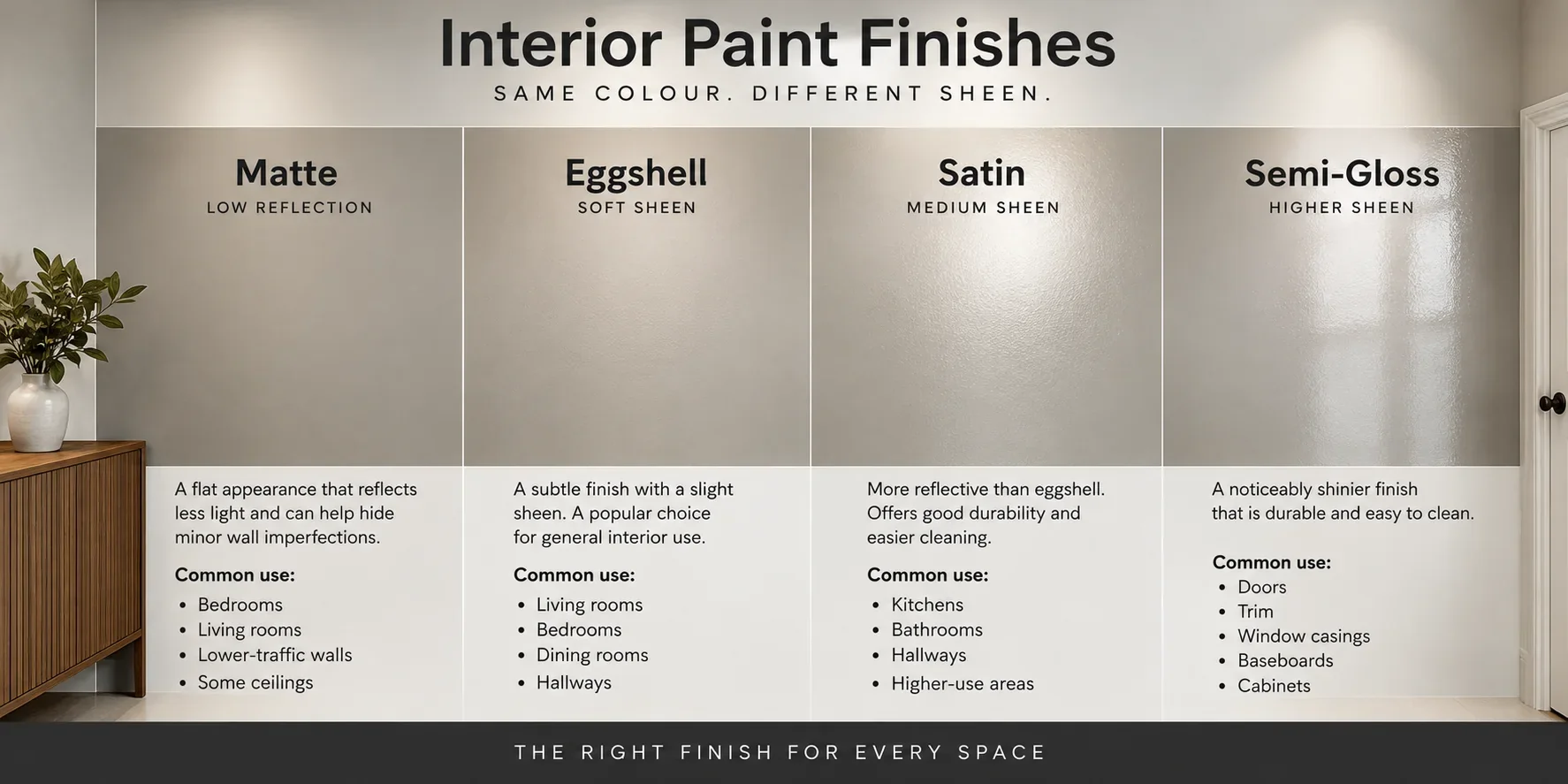
Matte
A flatter appearance that reflects less light and can help make small wall imperfections less noticeable.
Good choice for:
- Bedrooms
- Living rooms
- Lower-traffic walls
- Some ceilings
Eggshell
A subtle finish with slightly more reflection than matte. It is a popular general-purpose wall finish.
Good choice for:
- Living rooms
- Bedrooms
- Dining rooms
- Hallways
Satin
More reflective than eggshell and often chosen where easier cleaning and additional durability are useful.
Good choice for:
- Kitchens
- Bathrooms
- Hallways
- Higher-use areas
Semi-Gloss
A noticeably shinier finish often selected for surfaces that are touched frequently or need easier cleaning.
Common uses:
- Doors
- Trim
- Window casings
- Baseboards
- Cabinet applications
Higher Sheen Shows More Surface Imperfections
Semi-gloss and other reflective finishes can make dents, sanding marks, drywall patches, uneven surfaces, and poor preparation much more visible.
If the wall is not perfectly smooth, matte or eggshell may produce a more forgiving appearance. High-sheen finishes work especially well where durability and cleaning matter more, such as trim and doors.
Choose the Right Roller Nap
Roller nap is the thickness of the roller cover. Different nap sizes behave differently depending on how smooth or textured the surface is.
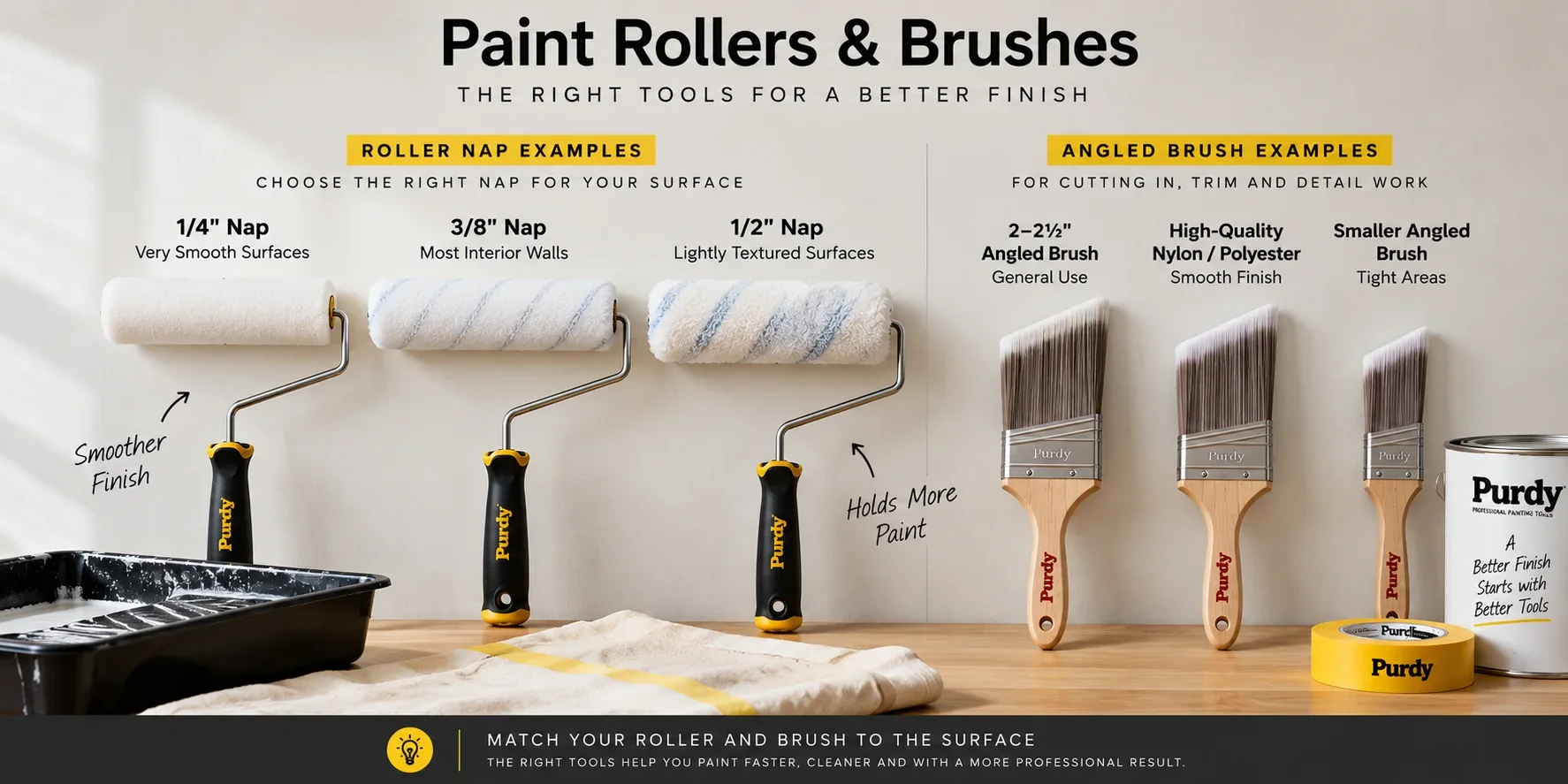
1/4" Nap
Very Smooth SurfacesA shorter nap applies less texture and is useful where a smooth-looking finish is important.
- Smooth doors
- Cabinet surfaces
- Very smooth walls
- Detailed finish work
3/8" Nap
Most Interior WallsA very practical roller nap for typical smooth to lightly textured interior drywall.
- Drywall
- Bedrooms
- Living rooms
- Hallways
- Many ceilings
1/2" Nap
Lightly Textured SurfacesA longer nap carries more paint and can reach into slightly textured or less uniform surfaces.
- Textured walls
- Some ceilings
- Less-uniform surfaces
- Higher paint pickup needs
A Good Brush Makes Cutting In Much Easier
Brush quality matters around ceilings, corners, doors, trim, baseboards, windows, and other areas where a roller cannot reach cleanly.
2–2½" Angled Brush
A versatile brush size for cutting in walls and working around interior trim.
Best for:
- Ceiling lines
- Inside corners
- Door frames
- Window trim
- Baseboards
Nylon / Polyester Angled Brush
A quality synthetic angled brush gives good control when cutting in and working with common water-based interior paints.
Useful for:
- Wall edges
- Trim
- Mouldings
- Touch-ups
- Detailed work
Small Angled Brush
A smaller brush provides additional control in tight locations where a larger brush is difficult to use.
Best for:
- Tight corners
- Small trim
- Hardware areas
- Touch-up work
Preparation
The Finish Is Only as Good as the Surface Underneath
Remove dust, grease, dirt, and contaminants from the surface.
Patch drywall holes, dents, cracks, and damaged areas.
Smooth patches, rough areas, and visible imperfections.
Prime repaired, porous, stained, or otherwise appropriate surfaces.
Painting Tips for a Cleaner Finish
Work in Manageable Sections
Work systematically so freshly painted areas overlap before the previous section begins to dry.
Keep a Wet Edge
Overlap the previous section while it is still wet to reduce visible lap lines and roller marks.
Fully Load the Roller
A roller that is too dry can create uneven coverage, unnecessary texture, and pressure marks.
Do Not Push Too Hard
Let the roller cover release the paint naturally. Heavy pressure can create lines and inconsistent texture.
Use Good Lighting
Side lighting can reveal missed areas, roller marks, rough drywall patches, and other surface defects.
Respect Drying Time
Allow the coating to dry as directed before applying another coat or touching up the surface.
Should You Add Water to Interior Paint?
Some painters occasionally adjust the consistency of water-based paint, but adding water should not be treated as an automatic painting step.
Benjamin Moore, Sherwin-Williams, BEHR, and other manufacturers offer many different formulations with different application requirements.
Always check the label and technical instructions for the exact paint being used before thinning it.
Many modern interior paints are designed to be used with a brush or roller without adding water. Unnecessary thinning may affect coverage, film build, colour consistency, and performance.
Small Details That Can Improve the Result
When several containers of the same colour are being used, combining them can help reduce small colour or sheen differences.
Dust left on a drywall repair can affect paint adhesion and make the patch more visible.
Paint does not hide a poorly finished drywall patch. Smooth the surface before applying primer and paint.
A roller nap that is too heavy for a smooth wall can create more texture than necessary.
A quality angled brush gives better control when cutting in around ceilings and trim.
Cover floors and furniture and protect outlets, switches, hardware, and nearby finishes.
Planning an Interior Project?
Interior painting, preparation, touch-ups, and finishing.
View Painting Services → 02 Drywall RepairRepair damaged walls and ceilings before primer and paint are applied.
View Drywall Services → 03 Handyman ServicesCombine painting-related repairs with other household maintenance tasks.
View Handyman Services →Visit Our Frequently Asked Questions
Learn more about quotes, pricing, materials, scheduling, service calls, and Toronto Handyman projects.
Ready to Get Started?
Need Help With Interior Painting?
Send us photos and a description of your project to request a quote for painting, drywall repair, preparation, and related interior work.